
 Norsk
Website for bakeries and cafés
Show what's in the counter, when the café is open and how customers order for a party. The AI makes the pages from your description, with room for the menu, your own food photos and requests for cakes and larger orders.
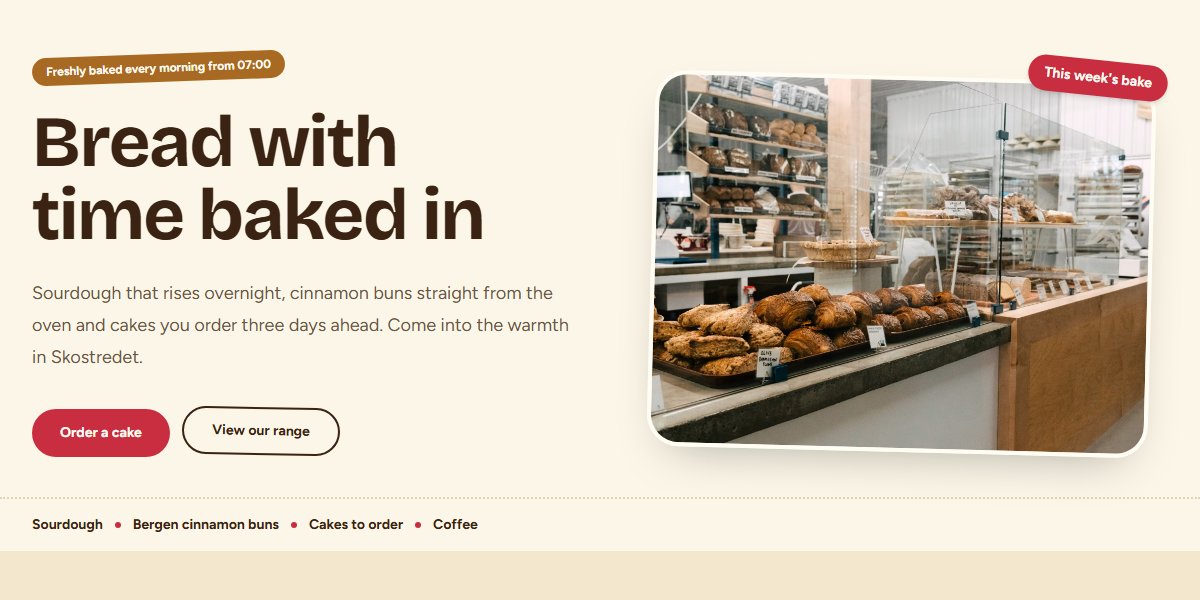
Themes built for bakeries
See a playful bakery with little badges and rounded photos, a calmer café with a large bread photo in an arch, and a red version with bold lettering and a wide photo. Open the menus and the ordering pages to find the layout that suits what you sell.
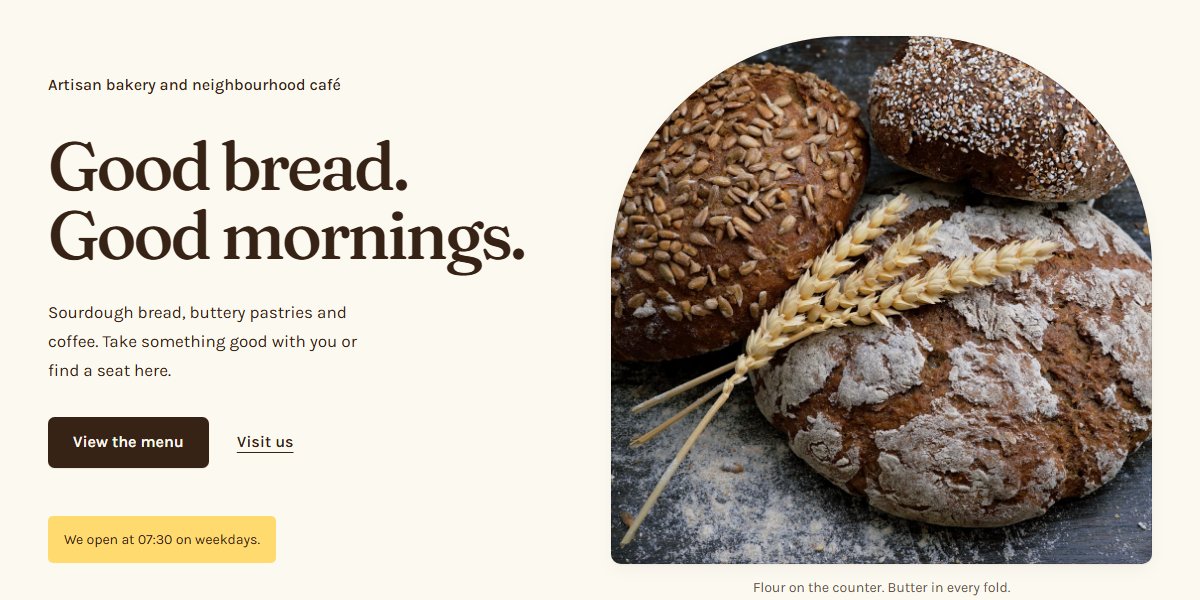
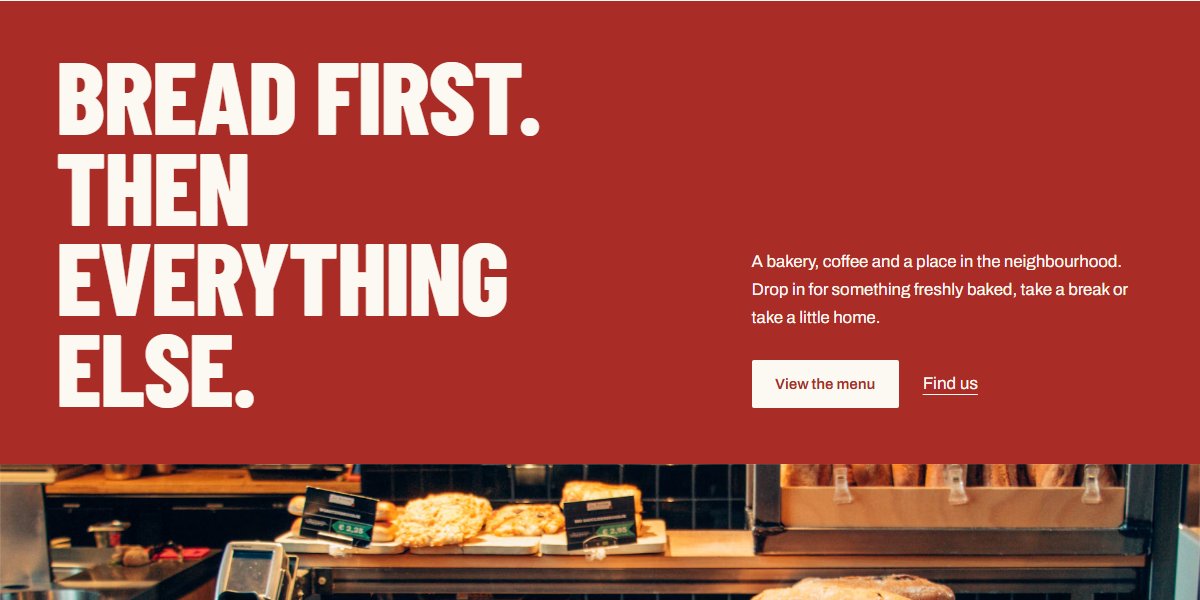
The pages bakeries need
Someone who wants a coffee now needs the menu, the address and the opening hours. Someone planning a birthday needs portions, the price and the order deadline. Give cake orders a page of their own, and put seasonal bakes and the story of your craft where you have time to keep them up to date.
- What we bake
- Order a cake
- Café and opening hours
- Catering
- Our story
- Blog
- Contact
The suggestion has 7 pages. Add and remove pages as you like.
What makes the difference for bakeries
The advice below is for this industry, not websites in general. It applies just as much whether you build the site here or somewhere else entirely.
Give the cake request a clear deadline
Ask for the type of cake, number of portions, date and preferred collection time. Say how early customers need to get in touch, and when you confirm price and capacity. The form should explain that a request only becomes an order once the bakery has confirmed it.
Opening hours and address on every single page
Half of a bakery's website is a place to look things up. Put the times at the bottom everywhere, and spell out public holidays: that's exactly when people check.
Keep the menu in step with the kitchen
Show prices and allergen information with the products, and let the kitchen check the content against the recipes you use. Mark seasonal bakes and items you only bake on certain days. A readable menu on the website is easier to check on a phone than a photo of the chalkboard.
Questions bakeries ask
The answers are the ones we would give on the phone.
Is a form enough, or do we need an online shop?
A form suits you when you have to settle size, decoration or capacity before you say yes. If customers are to choose products, pay and get a confirmed collection time straight away, you need a solution that handles ordering and payment. The website can link to one you already use.
What should a bakery blog be about?
Seasons and craft: the Christmas baking, why the sourdough takes three days, what happens to bread in winter. Neighbours read it and share it in local groups, and that's exactly the traffic you want.
Should cake prices be online?
A price per portion makes it easy, and filters out requests you would have said no to anyway. Decoration and custom work are priced after a conversation. Say so, and you avoid misunderstandings.
Other industries
Neighbouring industries have pages of their own, with their own themes and their own advice.
Website for caterers
Tell us what your kitchen delivers, and the AI writes the menu pages, the event pages and the request form. The form asks for the date, the number of guests and allergies: the three things you need to know anyway.
See the industry pageWebsite for florists
A few sentences about the shop are enough. The AI writes your range, the wedding and funeral pages and the delivery information, and puts the opening hours where people look for them.
See the industry pageWebsite for guesthouses and small hotels
Guests want to see the room and know what their stay will be like. Describe the place, and the AI makes a room overview, practical information and a booking request. If you already have a booking system, the website can send guests there.
See the industry page
Your website is one description away
Write a few sentences about your business, and you have somewhere to start.